The story of Lover's Lane is an urban myth about a couple who goes parking and narrowly escapes a horrible death. What we called "parking" is the custom of young people in a car finding a secluded space to canoodle away from prying eyes, and many towns have at least one road that is famous for such activities nicknamed Lover's Lane. The first part of this video explores the history of how parking itself became a thing.
Then at about five minutes in, we learn about the very real crimes that may have sparked the urban legend. Or did the urban legend inspire the crimes? Since we don't really know how far back the legend goes, it's not quit clear. But for someone who wants to kill and get away with it, teenagers in a car on a lonely road present a tantalizing opportunity.
The third section of the video goes into how these crimes and the Lover's Lane legend influenced the modern horror film. That seems only natural, since the target audience for these movies are young people who have the world in the palm of their hands, until they don't.
The soft, rolling melody of "Fields of Gold" is among British singer Sting's most famous songs. Here's a cover performance by The Petersens, a family band that is based in Bronson, Missouri. With a fiddle, a mandolin, a banjor, a gutiar, a double bass, and a dobro, this group offers bluegrass, folk, and traditional hymns.
The Petersens also present a folk version of "Dreams" by the Cranberries that is as uplifting as when Dolores O'Riordan first sang it.
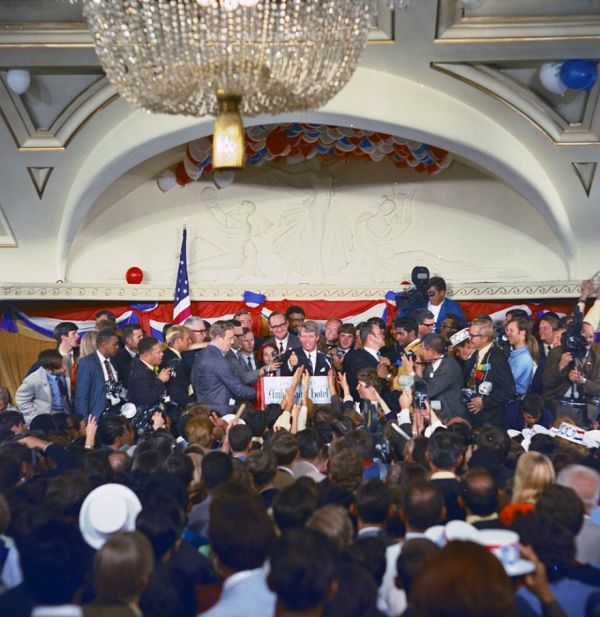
On June 5, 1968, presidential candidate Robert F. Kennedy made his way through a crowd at the Ambassador Hotel in Los Angeles after winning the California primary. He was shaking hands as a bullet tore through him, and he was dead the next day. The last hand he shook was that of 17-year-old hotel busboy Juan Romero. Romero crouched down beside Kennedy, and became a subject in the photograph that everyone remembers from that day.
That photo brought Romero celebrity, but he had a hard time dealing with it. He was only a teenager, and was wracked with guilt. What if he hadn't gone for a handshake from Kennedy? Would the bullet have missed him? It didn't help that other people were thinking the same thing, and let him know about it. Romero lived with the "what ifs" for the next fifty years, until his death in 2018. But he eventually made peace with history, and was even able to talk about it. Read Romero's account of what happened that day, and how he dealt with the aftermath at Utterly Interesting.
(Image credit: Sven Walnum)
Bowling balls can be quite heavy. The United States Bowling Congress requires that they weigh between 10 and 16 pounds. That can be too much for people with limited hand strength or finger coordination, so it's fortunate that the governing organization for that sport accepts adaptive balls.
These balls made by different companies have retractable handles. As soon as the player releases the ball, the handle snaps inside. The ball can then roll down the lane with minimal distruption from the site of the handle.
-via Massimo

William Pool of Bolivar, Missouri passed away at the age of 101. He enlisted in the US Army in 1941 and served throughout World War II, including participating in the Battle of the Bulge and the long Allied offensive that ended in Austria.
Pool was a member of the Sons of Union Veterans of the Civil War, a fraternal organization that honors ancestors who fought for that side of the Civil War. In the 161 years since the conclusion of that war, the organization is in the hands of later descendants, but Pool's father was, literally, a Civil War soldier.
KY3 News reports that Pool's father, Charles Parker Pool, was born in 1844. He served in the 6th West Virginia Volunteer Infantry Regiment. He was 80 years old when his son, William Pool, was born in January of 1925.
Who was the last son of a Confederate veteran? What was Calvin Robertson Crane, who passed away in 2019 at the age of 102. Like Pool, Crane was a combat veteran of World War II.
-via Oliver Jia
When a cool science fiction weapon sticks around for half a century and gathers more and more fans and more fiction, there will be people who put way too much thought into it. The lightsabers from Star Wars were born out of a cool special effect, but now everyone wants one, or at least wants to understand them.
What happens if you drop a lightsaber? Specifically, what happens if you drop one vertically, business end first, into the ground. Would it keep burning its way through the earth indefinitely? In the Star Wars universe, no, because there's a safety feature that disables the blade when it's not held. But there have been depictions of Jedi throwing lightsabers, so this feature apparently can be disabled. So what would happen in the real world? Rocket Riley goes through all the ways a lightsaber would act on earth, if there were such a thing. -via Laughing Squid
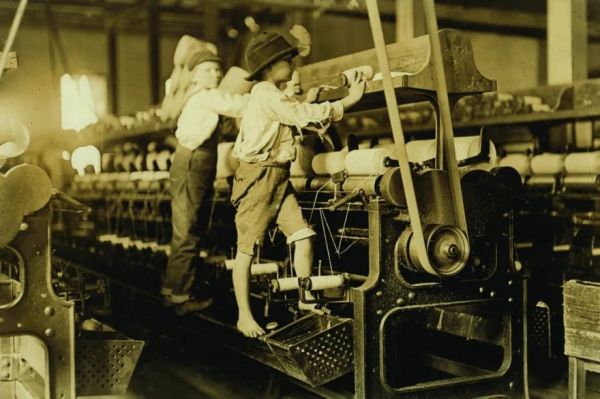
Around the turn of the 20th century, about two million children in America younger than 15 were full-time workers. Some were a lot younger than 15, and they worked dangerous jobs, sometimes 12 hours a day or more, just like their parents. The photo above shows two boys at a cotton mill in Georgia. An adult working this machine would have their feet on the floor, but children were assigned such work because they had smaller hands and arms that could manage the machines better. And of course, they weren't paid much.
The National Child Labor Committee was formed in 1907, and they commissioned sociologist and photographer Lewis Hine to document the practice in 1908. Hine knew that nothing would move popular opinion like a photograph. Factory overseers knew it, too. He had to sneak into workplaces, pretending to be an inspector or a Bible salesman to gain access, and he often took notes with his hands in his pockets to avoid detection. Hine's photos taken between 1909 and 1911 shocked the country, and led directly to the first federal child labor law in 1916. See samples of Hine's child labor photographs that led to changes in the system at Smithsonian.
First, you watch the video because cat, but wow, what a fine looking cat. Then you are impressed by her behavior. Rory (short for Aurora Borealis) is a four-year-old Bengal cat with nice markings and stunning aqua blue eyes. But Rory is more than her looks. She understands the English language better than you can imagine! That's because her person has so many delightful activities and rewards that go with those words. Or is Rory just a magical being trapped in a pretty cat body? She responds to a variety of commands, and she talks back, too. You have to wonder whether she's giving her own commands when she speaks. And since we don't understand, who are the real dumb animals here?
Rory takes that in stride. She has her mom wrapped around her little paw, and she's living a good life, chasing a plastic propellor around the house and impressing the internet. See more of Rory at her Instagram page.
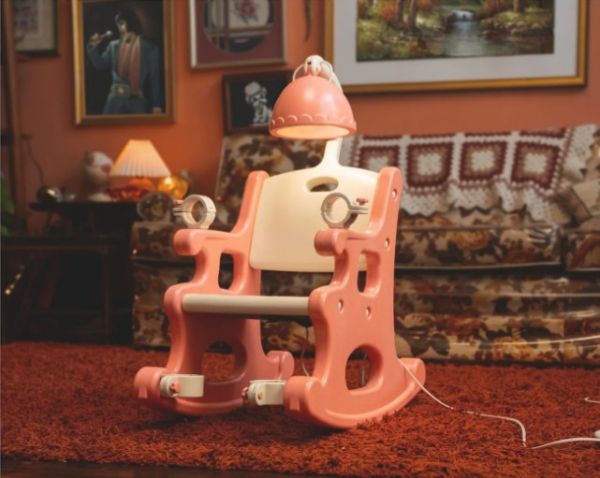
Sometimes imaginative play can go too far.
Andy Sahlstrom, an artist in Brooklyn, calls his site "Kids Toys, Adult Issues." At Shampoooty, he offers custom toys that parody the Little Tikes aesthetics marketed toward preschoolers. But despite their small sizes, pastel colors, and gently rounded contours, they're made for adults with a very dark sense of humor.

A case study from Brazil offers a tantalizing possibility for treating dementia with magic mushrooms. A woman in her 80s suffering from advanced Alzheimer's disease had been incontinent for five years, did not initiate conversation, and only spoke in monosyllables. Her medical guardian gave permission for a dose of hallucinogenic mushrooms. She was given five grams of mushrooms containing psilocybin, which is a massive dose, much more than in other such experiments.
After sleeping for 19 hours, the patient woke and began talking to herself. Over the next few days, she began speaking to others in complete sentences, controlled her bladder, and was even able to dress herself! The effects were lasting, too. She was given a second three-gram dose a month later, and showed even more improvement. The data from this one patient is a little sparse, as they didn't do any brain scans before and after treatment, but it may lead to more such experimentation. Read more about the magic mushroom treatment at Science Alert.
-via Damn Interesting
(Image credit: Cannabis Pictures)
When you think about how your life turned out, you might wonder how it happened. How much can you attribute to, or maybe blame on, your family? An awful lot of it. You probably resemble your siblings in appearance, health, temperament, and psychological well-being. But is that because you carry the same genes, or because the same parents raised you? The question of nature vs. nurture has been around for a long time. That's why scientists are so interested in twin studies. Identical twins have the same genes, so there's a factor you can control for. But most twins also have the same environment.
However, throughout the 20th century, scientists have been able to study the phenomena of twins raised separately, which opened a new door to answering the question of nature vs. nurture. From these studies, it turns out that genetics has more say in some factors, while environment is more important for other facets of life. This video from AsapSCIENCE shares some of the findings of those studies, but it doesn't address the disturbing scenario that made them possible. Why have there been so many identical twins raised apart? It's already a tragedy when a child cannot be raised by their biological parents, but being separated from your identical twin only adds more unnecessary trauma. How does finding that out later in life affect the studies?
There's a skippable ad from 7:49 to 9:36. -via Geeks Are Sexy
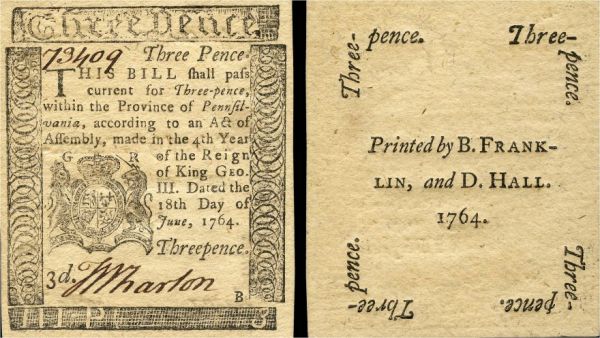
Before Benjamin Franklin experimented with electricity, before he was a Founding Father, he was a printer. One of the things he printed was paper money for the colony of Pennsylvania and eventually several other colonies. Paper money was a novelty in America, but became necessary when the supply of gold and silver coins couldn't keep up with the expanding economy.
Franklin knew that the bills he printed would only work if people could trust that they were real. So he spent his time coming up with printing methods that were hard to counterfeit, such as bespoke paper with embedded particles that could be seen, but were hard to duplicate. He also developed a unique type of ink. And his designs reflected intricate patterns based in nature. This work technically made Franklin a materials scientist, and some of his techniques are still in use. today. Read about the anti-counterfeiting methods developed by Benjamin Franklin at the Conversation.
(Image credit: Benjamin Franklin and David Hall)
Today's US military is an all-volunteer force, and they spend most of their time on military bases. These young, strong people eat a lot of food. To attract and retain them, base food is plentiful and pretty good. There are plenty of options (including fast food), and experts are always trying to improve both nutrition and quality.
The story is different for wartime. From the beginning in the Revolutionary War, the nation grappled with the difficulties of procuring, paying for, and delivering food to its troops in the field. There was no refrigeration, and preservation was hit-or-miss. Alcohol rations helped a little. But behind the scenes, there were those trying to solve the problem, because an army travels on its stomach. They developed C-rations, ration D, and ultimately MREs. All work under the idea that hunger makes everything taste better. Weird History Food takes us through the evolution of military rations in the United States.
This is going to be a hard sell when I talk to my library director on Monday, but at least there's precedent for professional wrestling in libraries. I mean, there's always been amateur, unsanctioned, and unscheduled wrestling in libraries. But, more importantly, there's already a system in place for wrestling as a form of event programming.
The Associated Press reports that Lucha Libro is an organization that brings theatrical, Mexican-style wrestling performances to public libraries. "Libro" is the Spanish word for "book," so in addition to physical performances, wrestlers share reading recommendations with patrons. Many of the wrestlers have personas inspired by reading and libraries, sucha s Llama Jack, whose appearance is taken from the Llama Llama picture book series.

Robert Francis undertook the task of ranking the greatest bird names of all time. The project involved going through the common names of more than 11,000 different bird species. A lot of birds already had notable common names long before they are studied, but you have to imagine naturalists and scientists having a hard time coming up with something both descriptive and unique.

Many birds are simply named for the way they look, like shining sunbeam, mouse-colored penduline tit, bearded mountaineer, and blue-footed booby. An awful lot are named for their call, which people have always tried to put words to. Some names we assume were assigned just because they are fun to say, like Stark's lark, chaco chachalaca, and bananaquit.

Then there are birds with names so bizarre that you have to find out the story behind them. These include diabolical nightjar, hoary puffleg, bared-faced go-away-bird, pipipi, and invisible rail. And those didn't even make the top ten! See all of the 100 best-named birds, plus dozens of honorable mentions at Bird History. -via Nag on the Lake
(Images from Cornell Lab's Macaulay Library)